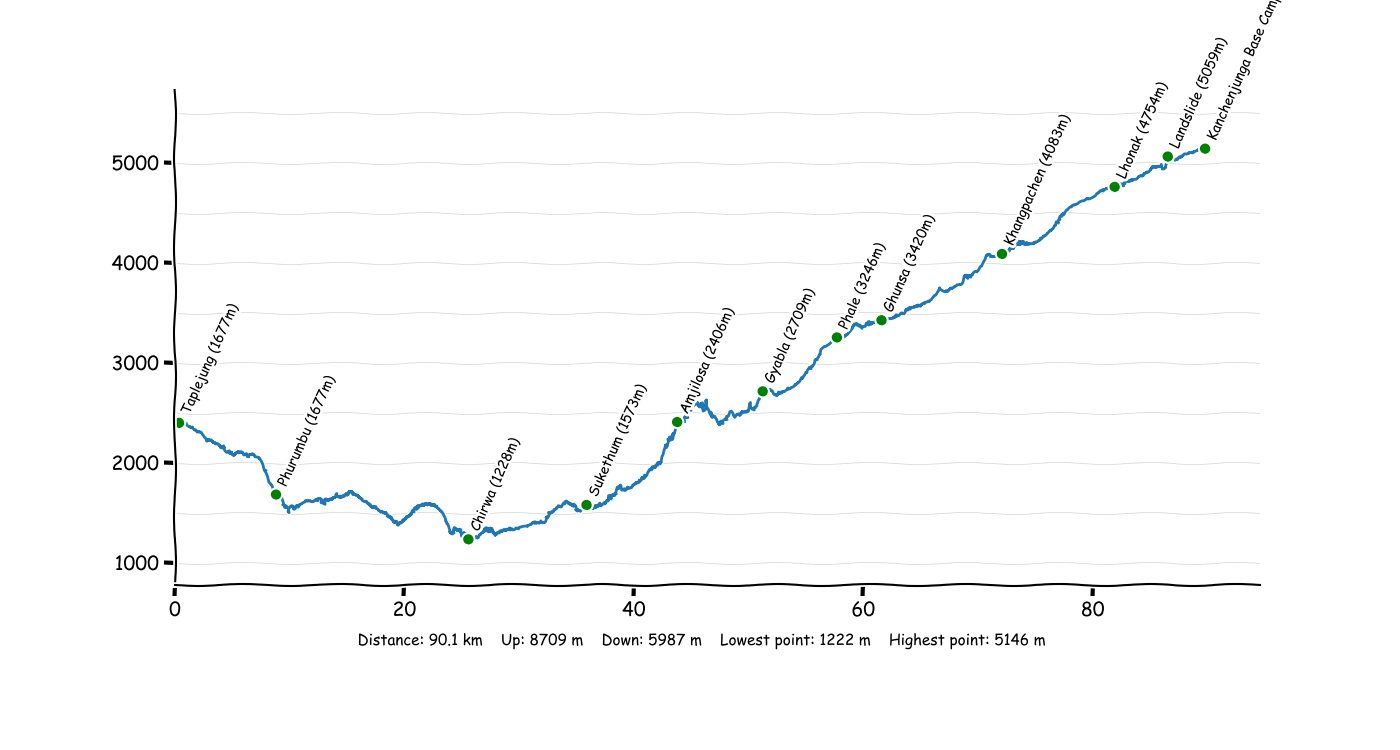
Tea house Trekking from Taplejung to Ghunsa and Kangchenjunga Base Camp where the actual Great Himalayan Trail will start in the most north-east section of Nepal. We will do this on our own without guide or porter support. From Ghunsa, a detour to Kangchenjunga Base Camp is planned. On this part of the route, tea houses are partially available or you can do tent trekking with your own provisions. Will take about 8 days and two spare rest days
Overview
Days
P1T1 Kathmandu Taplejung
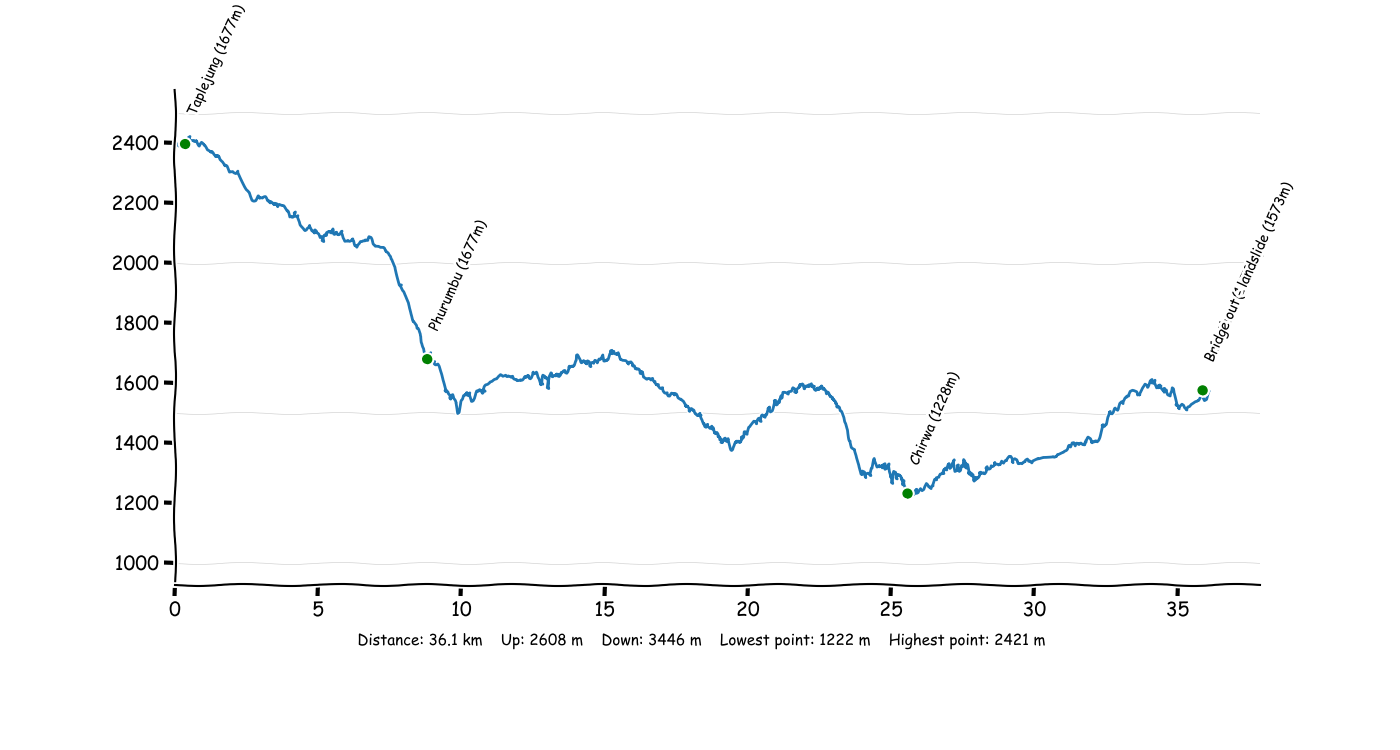
P1T2 Taplejung - Sukethum
Taplejung (1,585 m) to Sekathum (1,585 m) takes approximately 6-7 hours. The journey descends from Taplejung through terraced fields and small villages towards the Tamor River. The path is predominantly Nepali flat and passes through forests. Today, this journey is completed with a jeep. In the past, it had been a three-day hike along dirt roads. Most of the tea houses on the trek may now be closed as few people hike this route anymore.
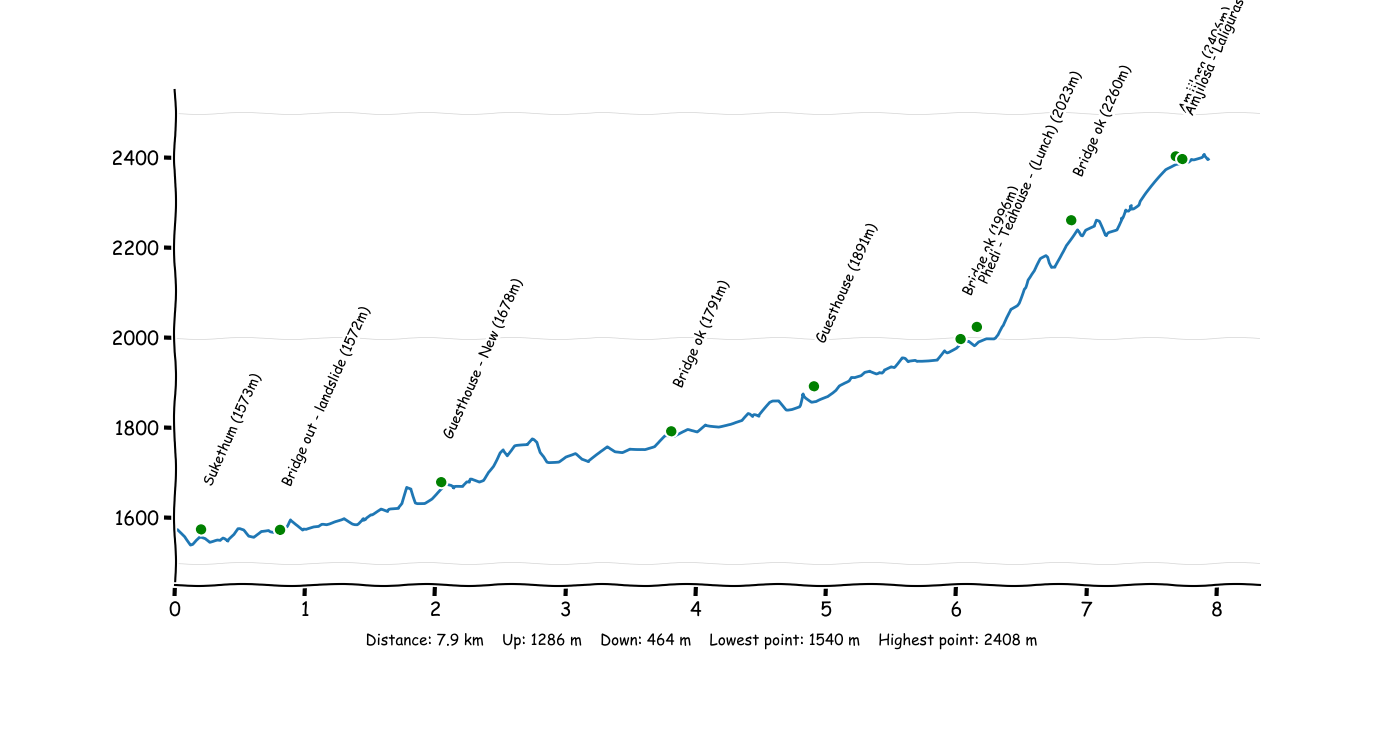
P1T3 Sukethum - Amjilosa
Sekathum (1,585 m) to Amjilosa (2480m). Steep trails through bamboo and rhododendron forests. Amjilosa Guest House is a small village with a few tea houses. From Sekathum, enjoy an easy hike along a well-maintained trail.
P1T4 Amjilosa - Gyabla
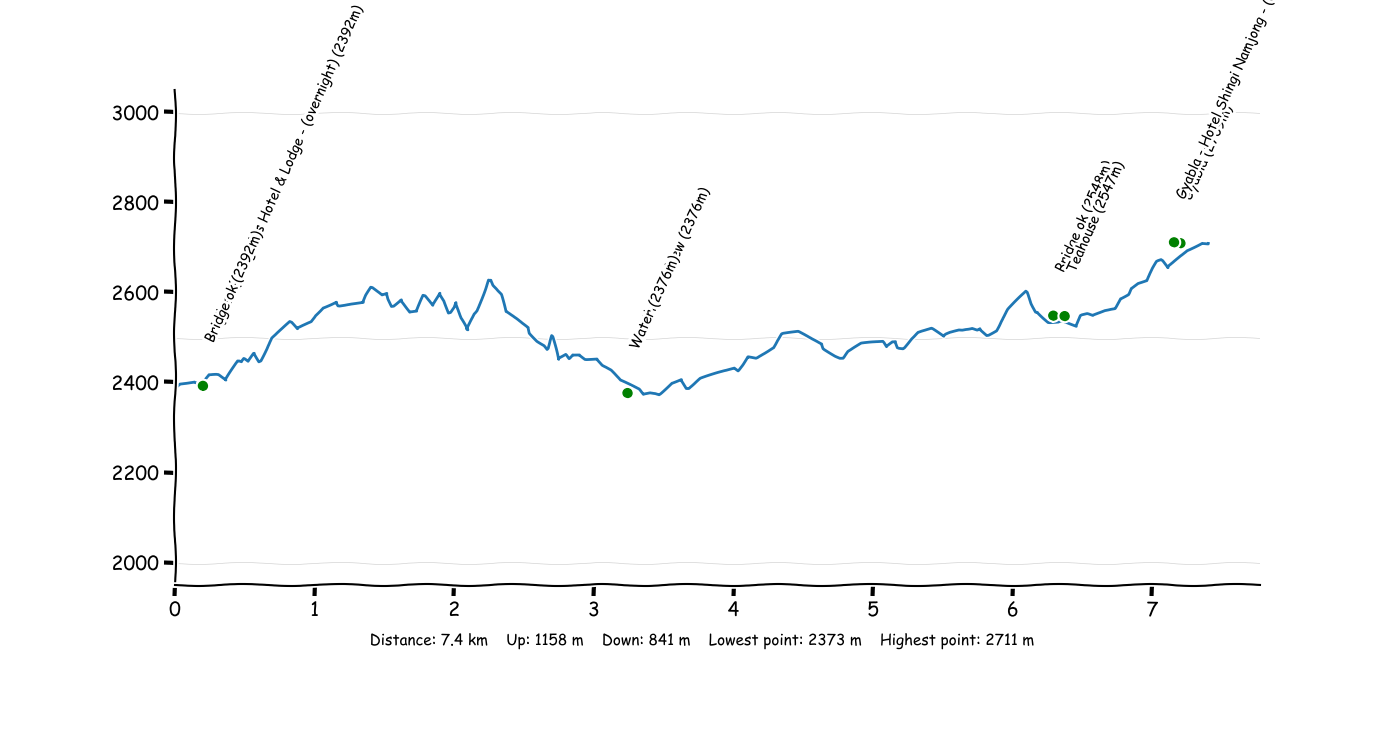
Amjilosha Guest House (2,395 m) to Gyabla (2730 m) in 5-6h.
The path leads again through forests and we cross several bridges over the Ghunsa River. The closer you get to Ghunsa, the more alpine the landscape becomes. There should be some good tea houses in Gyabla. Gyabla is a small settlement nestled in the valley, it serves as a gateway to the higher reaches of the Kanchenjunga region.
P1T5 Gyabla - Ghunsa
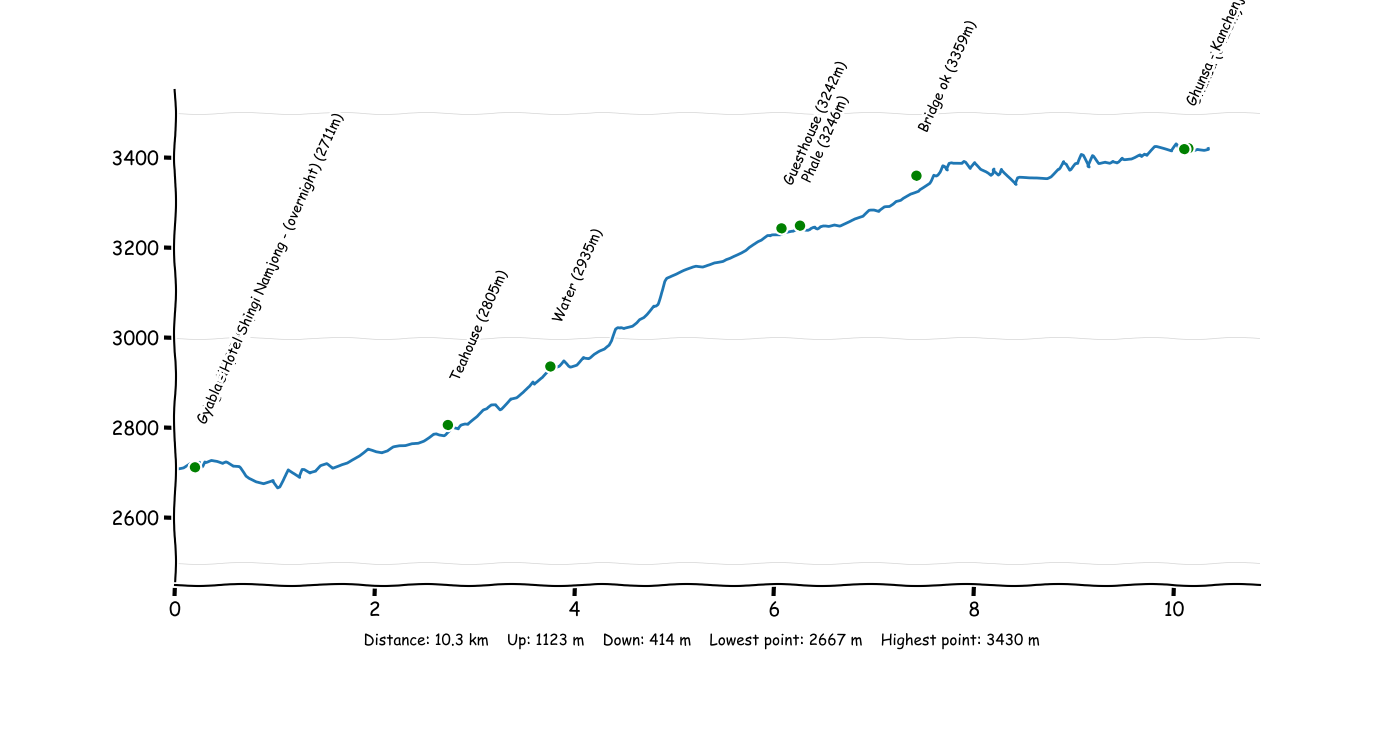
Simple hike along an easy to follow trail towards Ghunsa. Ghunsa is a traditional Sherpa village and is used by many trekkers in the region as a stop. Ghunsa is a beautiful Tibetan village and a major stop on the Kanchenjunga trek. The village features traditional architecture, a monastery, and serves as an important acclimatization point for trekkers.
After Phale the routes split: west toward Kanchenjunga Base Camp and north along the Great Himalaya Trail. To give the body time to acclimatise to the altitude, a rest day is typically taken here.
P1T6 Ghunsa - Khangpachen
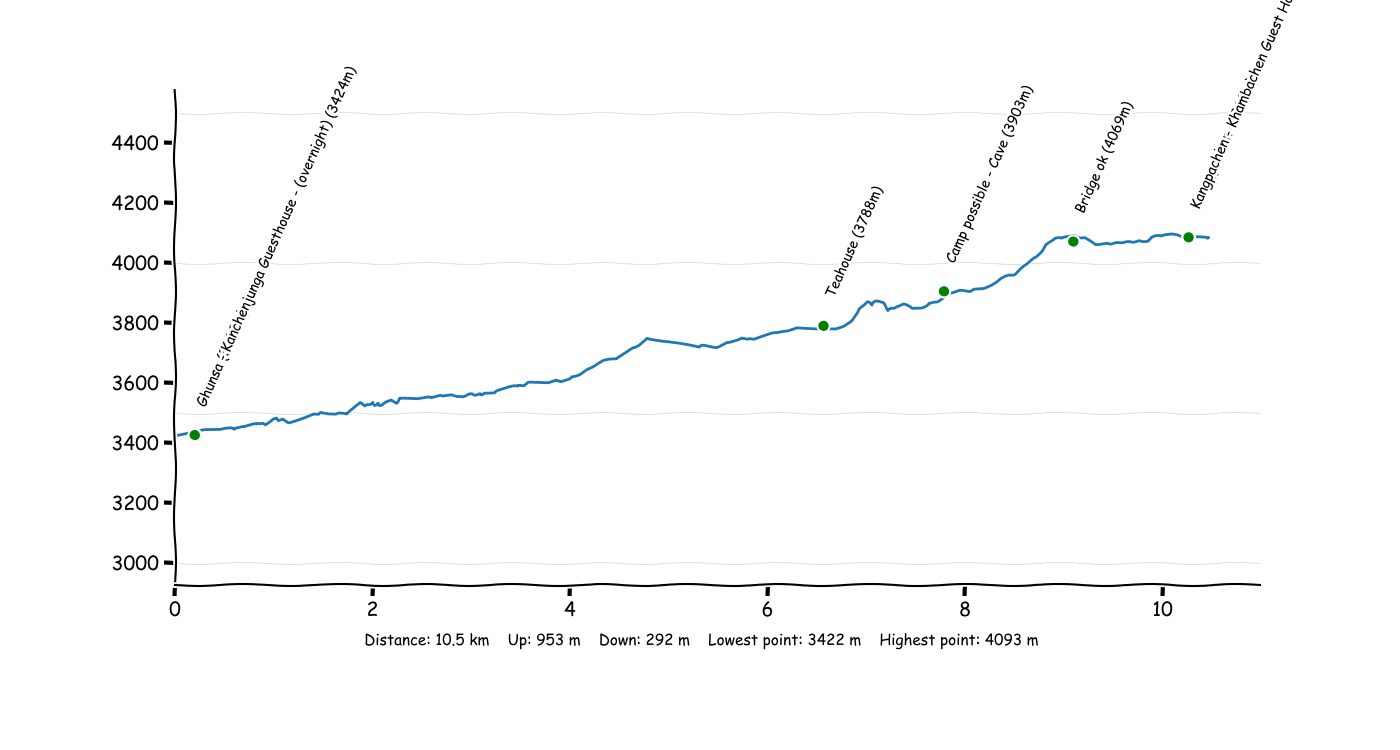
Trail was occasionally tricky to follow as it traversed landslide areas. Potential additional test day in Kambachen (4,080 m) in 5-6 hours. At first still in forests, and later in more alpine terrain. You have to cross several streams and hike over glacial moraines. Nice teahouse in Khangpachen.
P1T7 Khangpachen - Lhonak
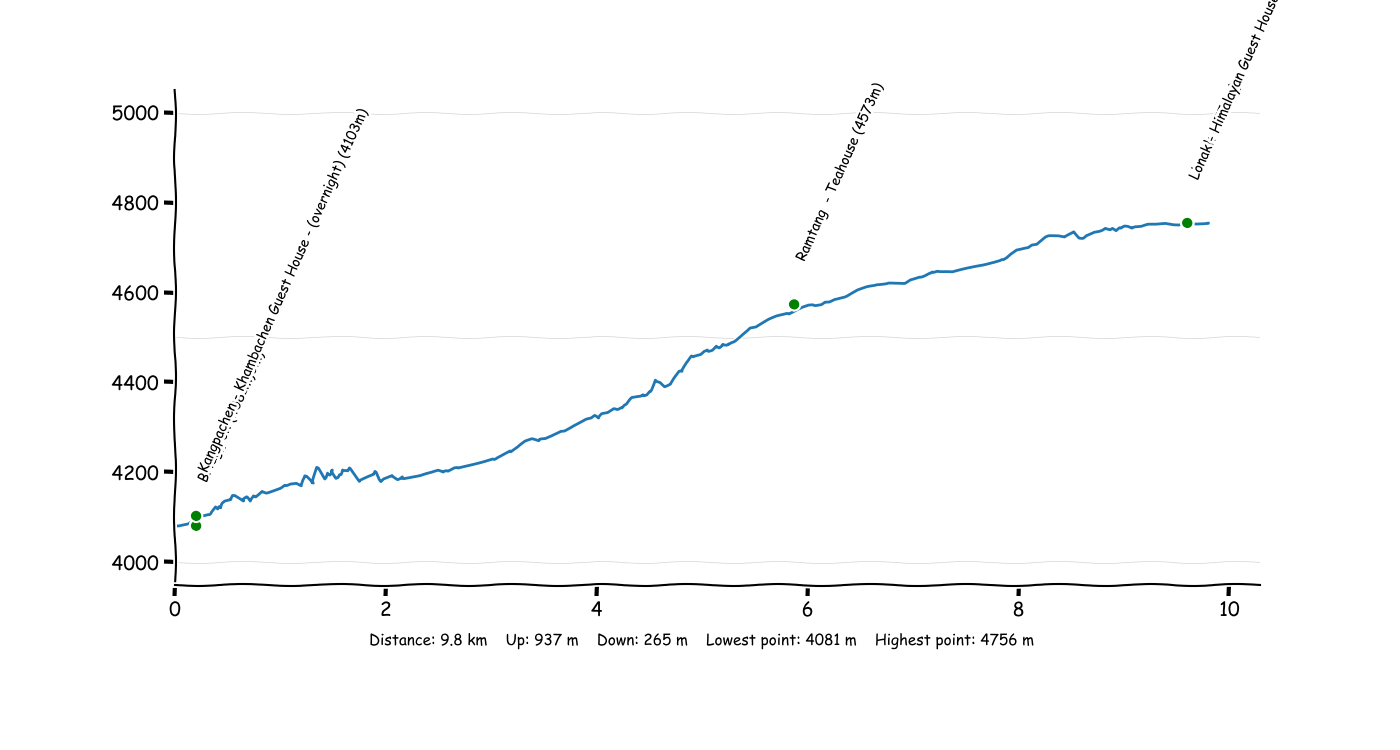
Continue toward Lhonak (4,780 m) in 5–6 hours. Through alpine terrain and over glacial moraines. Several rivers must be crossed. Accomodation in a Teahouse
Note from Dave:
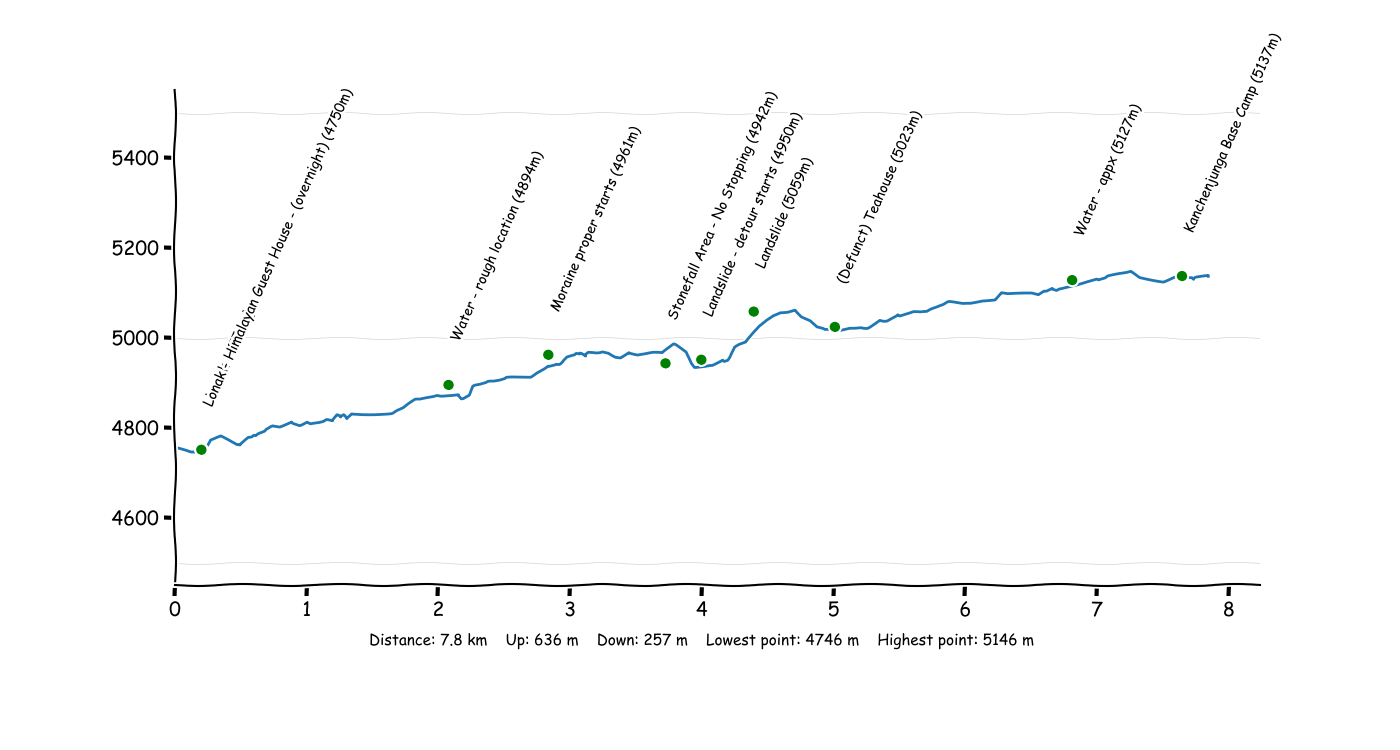
Trail was usually easy to follow with a few tricky areas. I made a mistake and ended up higher up the bank of the river traversing across a very dangerous landslide area. In the end I managed to descend safely to the river bed but then spent an hour scrambling over large boulders before I found the trail again.
P1T8 Lhonak - Pangpema
Trek to Pangpema (5,043 m) and on to Kanchenjunga North Base Camp in about 6–7 hours round trip. Very basic camp—consider whether it’s better to head back the same day. According to Pema’s plan, return to Lhonak the same day.
Note from Dave:
Trail was tricky to follow with a couple of large new landslides which meant lengthy diversions to find safe places to cross, and scrambling. Update from Kate (summer 2022): "The recent landslides Dave went through are fine"